"How long will it last?" is the second question every buyer asks, right after the price. The honest answer: a PSA nitrogen generator is a 10–15+ year asset — but only the pressure vessel part of it is immortal. What you actually maintain is a set of wear parts, each with its own clock. Here is the real service-life picture, component by component.
Typical Component Lifespan
| Component | Typical life | What ends it early |
|---|---|---|
| Carbon molecular sieve (CMS) | 5–8 years (up to 10) | Oil aerosol, moisture |
| Switching valves | 3–5 years / 1–2M cycles | Dirty air, long duty cycles |
| O₂ analyzer sensor | 2–3 years | Consumable — recalibrate, replace |
| Filter elements | 6–12 months | Consumable — the CMS's bodyguard |
| PLC / HMI | 10+ years | Rarely fails; spare available |
| Compressor airend | 8–10 years | Oil quality, service intervals |
| PSA towers / vessels | 15+ years | Code-built, essentially permanent |
The Five Factors That Decide Lifespan
- Oil carry-over — the #1 killer. One neglected coalescing filter lets oil mist coat the CMS, and capacity loss starts immediately. This single factor separates 15-year machines from 5-year disappointments.
- Air dryness. Wet air loads the sieve and corrodes valve seats. Keep the dryer honest and the dew point checked.
- Maintenance discipline. Filter changes on time, valve kits on schedule, annual calibration. Boring, cheap, decisive.
- Ambient conditions. Hot, dusty compressor rooms age everything faster. Clean intake air is free life extension.
- Duty profile. A generator sized for steady 24/7 duty lives longer than one constantly started and stopped at the edge of its capacity.
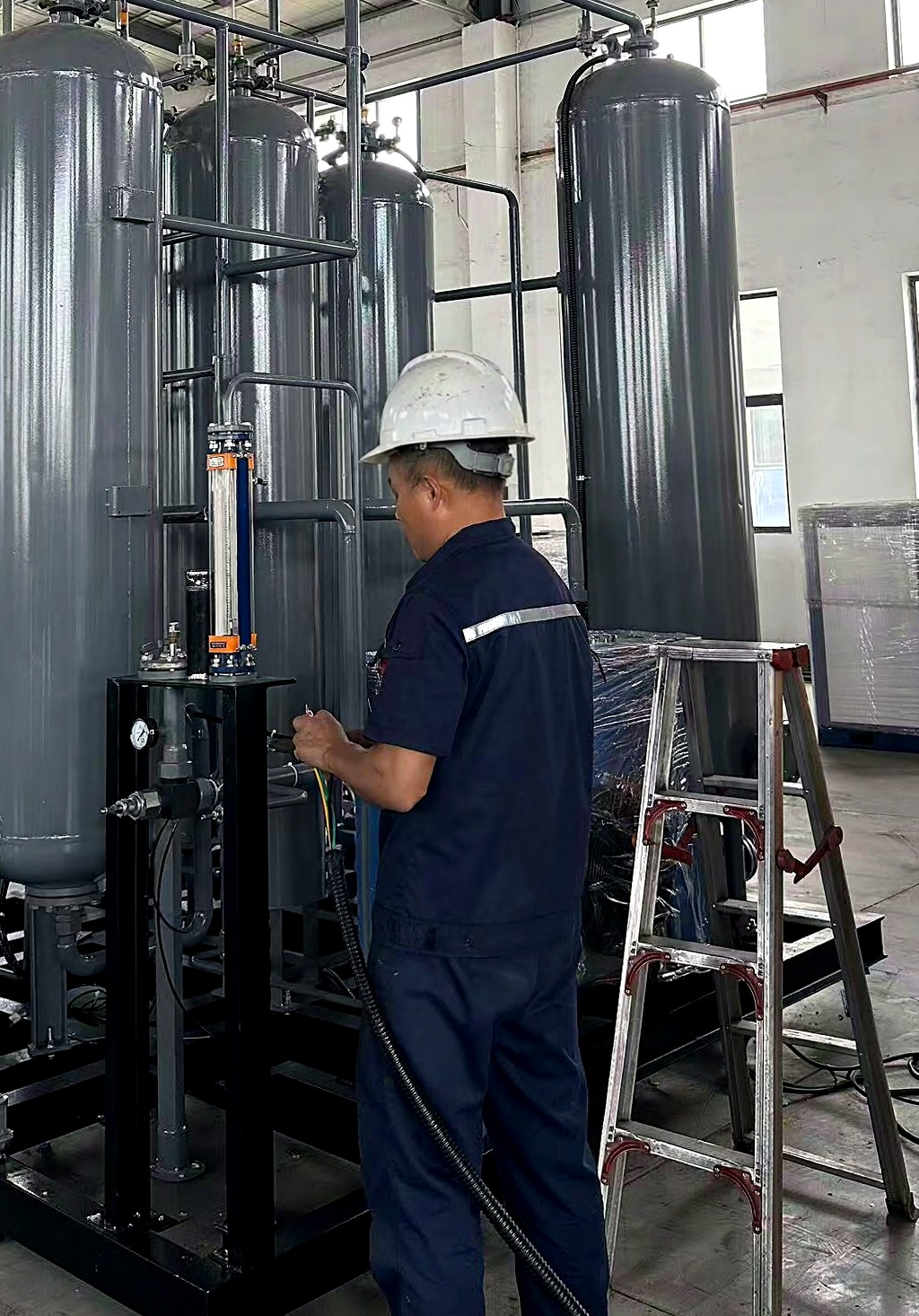
Maintenance Checklist
| Interval | Task |
|---|---|
| Daily | Glance at purity, pressure and dew-point readings on the HMI |
| Monthly | Drain condensate traps, check auto-drain operation, log purity trend |
| Every 6–12 months | Replace pre-filter / coalescing / carbon filter elements |
| Annually | Calibrate O₂ analyzer, verify valve switching times, check dew point, torque check |
| Year 3–5 | Valve maintenance kits, compressor airend service per its own manual |
| Year 5–8 | CMS replacement or top-up — restores original purity and recovery |
Refurbish or Replace?
When purity sags or recovery drops, do not assume the machine is finished. CMS replacement plus a valve rebuild typically costs 20–30% of a new unit and resets the generator to near-original performance — and the vessels, frame and PLC carry on for another decade. For most users, refurbishment at year 6–8 is the economic sweet spot.
Frequently Asked Questions
How long does a PSA nitrogen generator last?
A quality PSA nitrogen generator typically serves 10–15+ years. The pressure vessels and frame easily outlast that; what ages first are the consumable internals — carbon molecular sieve (5–8 years), switching valves (3–5 years) and the O₂ analyzer sensor (2–3 years).
What is the lifespan of carbon molecular sieve (CMS)?
5–8 years in typical duty, up to 10 with excellent air treatment. CMS does not wear out mechanically — it loses capacity through contamination, chiefly oil aerosol carry-over from the compressor, and through moisture if the dryer underperforms.
How often should a nitrogen generator be serviced?
Filter elements every 6–12 months, a full inspection annually (valve timing, purity calibration, dew point check), valve maintenance kits around year 3–5, and an O₂ sensor replacement every 2–3 years. Following the manual's schedule is the cheapest insurance you can buy.
What shortens the life of a nitrogen generator?
The top five: oil carry-over from a badly serviced compressor, wet air (dryer fault), skipped filter changes, hot and dusty compressor rooms, and frequent on/off cycling outside the design duty. All five are preventable.
Can an ageing nitrogen generator be refurbished?
Yes. CMS top-up or replacement, valve rebuild and analyzer recalibration typically cost 20–30% of a new unit and reset the machine to near-original purity and recovery. We offer refurbishment support for XINRUI units and most major brands.